Shinvara beginner’s guide
Shinvara is a ninja action roguelike in development for iPhone. This guide follows the development build, so details may change before release.
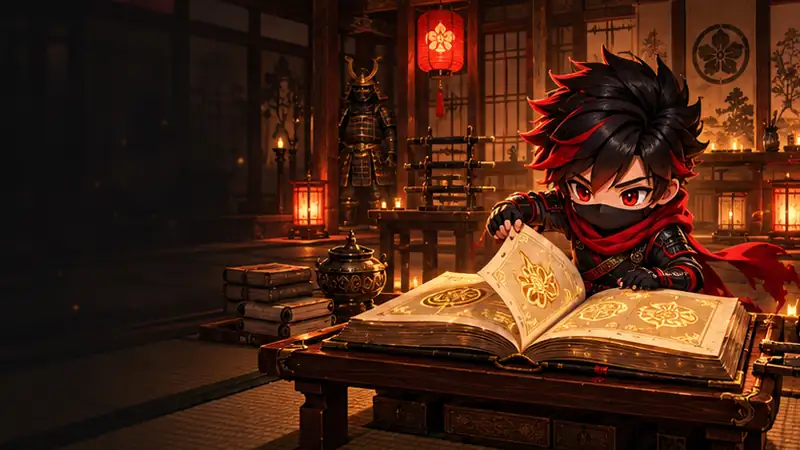
What kind of game is Shinvara?
Shinvara is a ninja action roguelike. Each run takes you through rooms full of enemies, and the door to the next room opens only when every enemy is defeated. The powers you pick change from run to run, so every attempt is a new combination.
Two kinds of growth run side by side: a run level that lasts for one attempt, and permanent levels and equipment that stay with your ninja between runs.
Move, stop, strike
On iPhone a floating joystick appears wherever your finger lands, and dedicated buttons handle the dash and your two active skills. Every enemy has its own rhythm, and the bestiary shows how to read each one.
The key rule: your ninja attacks automatically, but only when you stop moving. Stand still and the strike goes to the nearest enemy; move again and the swing is cancelled.
With a hybrid weapon such as the katana, you use the blade up close and shuriken at range. Melee is a three-strike combo whose third strike sends out a frontal energy wave.
The dash is your best defence
The dash is a short burst that carries you through enemies, though never through walls, and while you dash you take no damage: it is your answer to almost every attack.
Every enemy attack is announced by a warning painted with brush strokes that shows where the blow will land. Read it, then move out of the marked area or dash straight through it.
Time it well for a perfect dodge: dash just as a blow is about to land and part of the dash cooldown comes back at once.
Two active skills
Every ninja carries two active skills, each on its own button with its own cooldown. They appear on screen once unlocked, and every ninja has a different pair: see the ninja page.
Watch the recharge and save the strongest effect for the decisive moment, such as a crowded room or the pause after a boss’s big attack.
Level-ups: one choice out of three
Defeated enemies drop experience. Each time your run level goes up, you get three upgrades from different families: projectiles, elements, mobility, defence, sustain, summons, melee and burst. Read all three before you pick.
Names you will meet often: Multi Shuriken adds projectiles, Ricochet and Piercing Edge make shuriken bounce or pierce, Spirit Shield absorbs a whole hit, Ninja Companion calls a temporary ally and Final Seal makes defeated enemies explode. A choice can also be one of your ninja’s three exclusive abilities, which grow up to level 3 (see the ninja page).
Elements follow a special rule: you can pick only one elemental shuriken per run, whether flame, frost, lightning or venom. Once you take one, the others stop appearing.
Some upgrades belong together: collect three matching ones to unlock a hidden Ninja Technique, and the HUD shows how close you are. When every power is maxed out, level-ups offer emergency refills instead.
Angels and pacts between fights
Between rooms you may meet a healing angel offering three gifts: a heal, a Blessing that raises your attack for the rest of the run and stacks up to three times, or a protection that clears negative effects or gives you a shield.
You may also be offered a devil’s pact. It lets you trade health for power, and you can always refuse it. Accept only when you have health to spare.
The combo counter
The combo counter rises only when your hits land, and it resets when you take a hit or wait too long. It measures precision and does not add damage, so never take a risk just to keep it going.
Growing between runs
Outside the run, each ninja has permanent character levels, separate from the run level. You also equip gear such as a weapon, a mask, armour, gloves, a ring and a talisman, plus cosmetic cloaks and headbands.
Equipment comes in seven rarities, from Base to Mythic, and rarer items are stronger. Every item can be improved up to level 50, and coins are earned simply by playing.
Weapons come in families, each with its own way of attacking:
- Katana: hybrid, blade up close and shuriken at range.
- Naginata: wide sweeps in front of you.
- Dual katanas: a fast combo.
- Kusarigama: circular strikes.
- Bow: long range.
- Shuriken: the fastest ranged weapon.
- Kunai: balanced ranged attacks.
- Bombs: slow but strong.
Contracts and modes
Contracts change a mission’s rules. Normal is the standard. Silence removes all healing and toughens enemies, but pays more coins. Storm adds pressure and projectiles, plus elemental materials. Master brings more complex fights and a single life, with the best chance of rare items.
As your account level grows, more modes open up: the Training Dojo, to try ninja and equipment with no rewards or progress at stake, then the Daily Challenge, Boss Rush and Endless.
30 tips from the dojo
Short, practical and taken from the development build.
Movement and defence
Most runs are won or lost on footwork, so start here.
- Stand still to strike: your ninja attacks on its own only when you stop moving.
- With a hybrid weapon you switch to the katana up close: it hits harder but leaves you exposed.
- Your dash passes through enemies but not through walls: use it to slip past a crowd.
- You can’t be hit while dashing, so use the dash to cross danger zones.
- Perfect dodge: dash just as a blow lands and you get part of the dash cooldown back.
- The door opens only when every enemy in the room is defeated.
- Every enemy attack is announced by a painted warning. Read it, then move.
Level-ups and builds
A run is built one choice at a time, and these tips help you choose well.
- Always collect the experience enemies drop: every level-up is a new choice.
- Level-up choices come from different families: read all three before you pick.
- You can pick only one elemental shuriken per run: once you take one, the others stop appearing.
- Sometimes a level-up offers one of your ninja’s three exclusive abilities, and each grows up to level three.
- Collect three matching upgrades to unlock a hidden Ninja Technique. The HUD shows your progress.
- Spirit Shield absorbs a whole hit, so one mistake costs you nothing.
- At full health, skip the Angel’s heal and take the Blessing: there is nothing to restore.
- A devil’s pact trades health for power, and you can always refuse it.
Enemies and bosses
Every enemy telegraphs its attacks, and each one leaves an opening.
- Kunai Throwers aim where you’re going: change direction instead of running in a straight line.
- Bamboo Shinobi can sidestep your shots. Bait the dodge, then strike.
- The Eclipse Invoker’s seal lands where you stood when it was cast: step away and it misses.
- Frost Stalkers throw from afar and slash up close. Rush in right after a throw.
- The Veil Ronin needs a long breath after its double slash. That’s your window.
- The Void Shogun’s charge leaves a trail that stays dangerous for a moment: don’t walk back through it.
Learn one enemy at a time and every room becomes a fight you can read.
Ninja, contracts and modes
Each ninja rewards a different habit, and each contract changes the rules.
- Shinvara: Veiled Step cuts damage right after a dash. Dash through an attack, then trade blows.
- Shinvara: Crimson Aura and Dusk Blade keep hurting foes while you reposition.
- Shinvara has a natural chance to dodge, but don’t count on it: read the warning and dash anyway.
- Exclusive abilities grow up to level 3 during a run: when one you already have comes back, taking it makes it stronger.
- Every ninja has two active skills with separate cooldowns: use one and keep the other ready for the next opening.
- Silence contract: no healing at all, but more coins. Build for defence.
- Master contract: you get a single life, so play more carefully than usual.
- Try ninja and equipment in the Training Dojo: no run spent, but no rewards either.
- Rarer equipment is stronger, and items can keep improving across many levels.