Behind the scenes of Shinvara
Shinvara is an independent project developed by one person. This article covers the ideas behind it, the choices made along the way and how it is tested before every update.
An independent project
Shinvara is developed by Gioele Giacalone, in Switzerland, as an independent project. There is no big studio behind it: design, development, testing and this website are handled by the same person, with the help of modern tools for art and code.
The game is built with Godot, an open-source engine, and it is designed for iPhone first: you play in portrait, with one hand, and runs last just the right time for a break or an evening.
The idea: skill above all
The rule behind every design choice is simple: Shinvara should reward skill, not time spent repeating the same rooms. Players who play well and fast should always be rewarded.
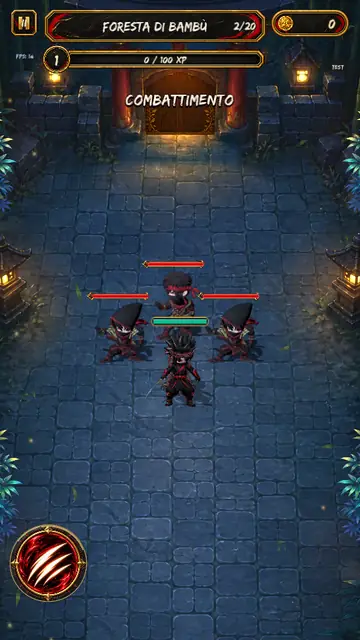
Many of the game’s mechanics come from that. Every enemy attack is announced by a painted warning, so a hit you take is always a lesson and never a surprise. The dash makes you untouchable for an instant and the perfect dodge rewards timing. Enemies have recognisable patterns, with attacks that differ from one another, and bosses mix moves you can learn.
The style: black ink and crimson
Visually Shinvara follows a precise direction, internally called “premium black ink”: deep blacks with a light brush texture, antique gold for borders and hierarchy, crimson red for energy and danger. Blue only appears where it carries a precise meaning.
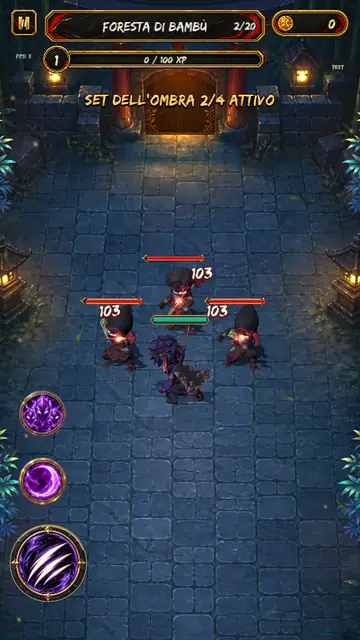
The characters are 3D chibi ninja, with compact proportions and silhouettes that read well on a small screen, while the arenas combine 2D and 2.5D environments. Visual effects follow an important rule: they must never cover your ninja, because in a dodging game seeing your character at all times is essential.
Ten ninja, four worlds
The game has ten ninja, each with an element, two active abilities and three exclusive abilities. Every ninja needs a recognisable way to play, not just a different look.
The worlds have campaigns of growing length: the twenty-room Bamboo Forest, the forty-room Shadow Temple, and more that stay a surprise until launch.
How it is tested
Every change goes through a series of checks before it reaches testers. The game is actually launched and the affected screens are compared before and after; before every new build, a full run is played with a brand-new account, just as a player would on first install.
Smoothness is a stated goal: 60 frames per second on iPhone, with no stutter and no lost input. The size of the game matters too, because nobody wants to download more than necessary: assets are compressed and optimised at every step.
Where we are today
Shinvara is in closed beta on iPhone through TestFlight, for invited testers only. It is not on the App Store yet and there is no announced release date: we would rather share the real status than make promises.
This site is where you will always find the news: guides and articles like this one. For questions or reports you can write to support.
The articles follow the development build: numbers and details may change before release, and we update them when they do.